

Why a credit loss is harder to explain than a market loss and how to detect the signals in time.
Interview summary
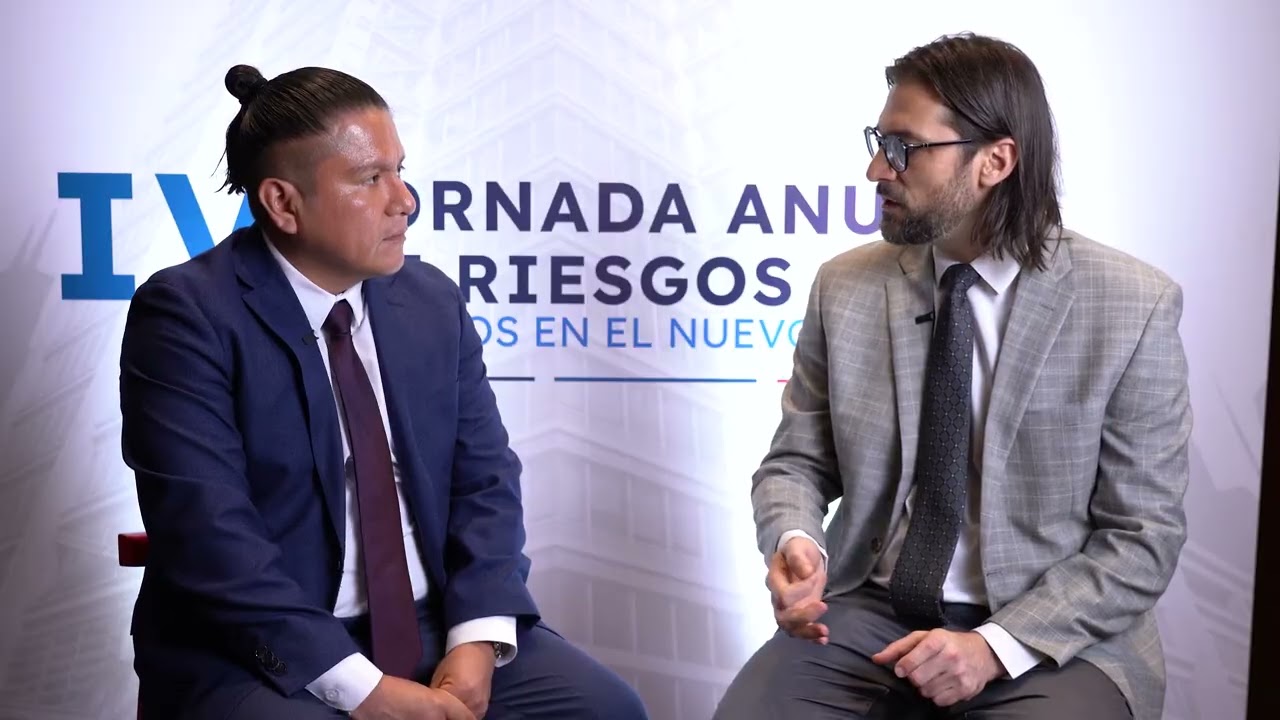
Andrés Granados Ruiz explains why it is easier to present to a board losses from market movements than a marginal loss from a credit default: the former tend to be temporary, can reverse and, if the portfolio is held to maturity, the mark-to-market loss is not necessarily the real one. A default, on the other hand, means losing part of the capital. What matters, he says, is being able to explain the rationale of the decision, with criteria that make sense, with all areas of the investment process involved and with what was approved well documented.
He recommends governance, with approval levels and communication between risk and investments: separate areas but a close relationship, because the job of the risk manager is to accompany and contribute to profitability, not to slow things down. Although the deterioration of an issuer cannot be predicted, due diligence does reveal signals, as seen in cases such as Silicon Valley Bank or Credit Suisse, and it is preferable to accept the type one error, that is, to exit issuers that may not default. On rating agencies, he advises not relying on them alone: complement them with market metrics, which give earlier information, with one-year probabilities of default and with fundamental analysis of financial statements.
Topics covered
- Market losses versus credit default losses
- How to explain the investment decision to the board: criteria and documentation
- Governance: approvals and the relationship between risk and investments
- Signals of issuer deterioration and the cost of acting in time
- The limits of relying only on rating agencies
- Market metrics, probabilities of default and fundamental analysis
About Andrés Granados Ruiz
Economist with a master degree in Economics from the Pontificia Universidad Javeriana and a master degree in Public Administration with an emphasis on financial markets from Columbia University. Expert in credit risk, capital adequacy, international reserves management, investment portfolio management and asset and liability management (ALM).
More Ries-GO interviews
Operational, third-party and cyber risk
Crisis management: preparation makes the difference
Jorge Luis GarcíaDirector of Financial Stability, Banco de México
Market risk and valuation
Beyond VaR: entropic measures for extreme risk
Dany CajasIndependent consultant and creator of Riskfolio-Lib

Looking for an event on a specific topic?
Tell us which topics you would like to take part in at these events by writing to our email info@gestionderiesgo.org
Menu
Sobre Nosotros
CGR Educa
Policies

© COPYRIGHT 2022 ALL RIGHTS RESERVED GESTION DE RIESGO RD SRL.
Connect with our networks