

Report · International body
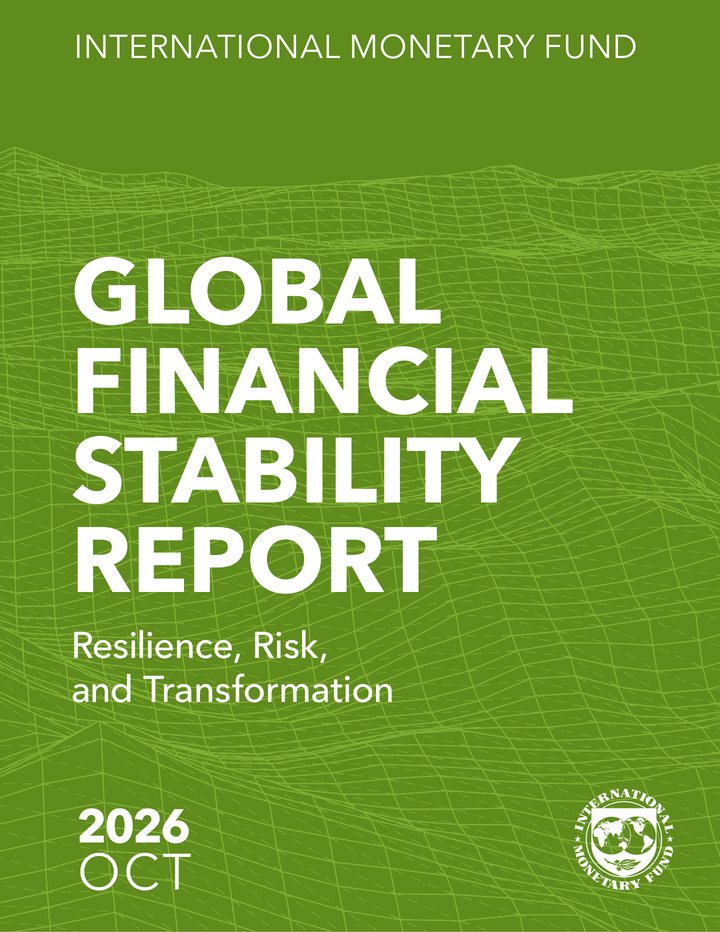
Global Financial Stability Report, October 2026: Resilience, Risk, and Transformation
Markets are holding up thanks to earnings and growth, but the IMF warns that three possible shocks, tied to artificial intelligence, sovereign bonds and cyber risk, could tighten financial conditions abruptly.
- Organization
- International Monetary Fund (IMF)
- Document date
- 13 October 2026
- Type
- Report
- Language
- English
- Scope
- International
- Length
- 84 pages
What it contains
The October 2026 edition of the Global Financial Stability Report, reflecting information as of 30 September and published on 13 October, concludes that markets have been resilient since April thanks to corporate earnings and growth, although risks to financial stability remain elevated. It selects three risks that could trigger a sharp tightening: a correction in AI-related assets, made worse by leverage, concentrated exposures and circular financing arrangements; a disorderly rise in sovereign bond yields if inflation or fiscal concerns resurface; and cyber threats, which grow with digitalization.
Among the vulnerabilities that could amplify them, a global stress test confirms that banks would remain broadly resilient under an adverse scenario, although a significant share would be left vulnerable and their links with nonbank intermediaries have deepened. Some emerging markets have eroded their policy buffers, insurers and pension funds hold more illiquid assets, and private direct lending funds combine higher leverage with contingent liquidity risks that have not yet been tested.
Chapter 2 shows that the gross assets of hedge funds grew from about $4 trillion in 2013 to close to $13 trillion in early 2026: they support liquidity in normal times, but leverage and crowded trades can amplify stress. Chapter 3 analyzes tokenization, still small and fragmented, which could open new channels of leverage and liquidity mismatch. Priorities include containing leverage in AI exposures, strengthening bond market liquidity, ensuring the continuity of critical services in the face of cyber incidents and closing data gaps on nonbank intermediaries.
Why it matters for risk management
It is a context reference for monitoring market, liquidity, technology and contagion risk with nonbank intermediaries, and for designing stress scenarios that combine interest rate, technology valuation and cyber risk shocks. It is a global analysis that does not address the Dominican Republic specifically; local use requires contrasting it with own data.
Resumen elaborado por el Club de Gestión de Riesgos de la República Dominicana a partir de la lectura del documento original, con fuente verificada el 4 de noviembre de 2026. No sustituye la lectura del texto oficial ni constituye asesoría.

Connect with our networks