
Publicaciones del sector

The 2026 Global AI in Financial Services Report: Adoption, impact and risks

A survey of 628 organizations in 151 jurisdictions: 81% of financial firms adopt AI, the industry is ahead of regulators and fintechs ahead of incumbents; value is hard to measure and the main risks are data privacy and model hallucinations.
By |2026-10-18T17:49:43-04:0028 de April de 2026|Publicaciones del sector|Comments Off on The 2026 Global AI in Financial Services Report: Adoption, impact and risks

Global Financial Stability Report, April 2026: Global Financial Markets Confront the War in the Middle East and Amplification Risks

The IMF concludes that global financial stability risks are elevated and examines the channels through which the war in the Middle East could be amplified, with a chapter on capital flows to emerging markets.

By |2026-10-18T17:50:09-04:0014 de April de 2026|Publicaciones del sector|Comments Off on Global Financial Stability Report, April 2026: Global Financial Markets Confront the War in the Middle East and Amplification Risks

Report on recovery plans dry runs (EBA/REP/2026/09)

The EBA compares how 16 banking groups from 10 EU countries test the execution of their recovery plans through dry runs: the most mature use them as management tools, and those done only to comply tend to be less useful.

By |2026-10-18T17:50:22-04:0013 de April de 2026|Publicaciones del sector|Comments Off on Report on recovery plans dry runs (EBA/REP/2026/09)

In data we trust? Emerging policy and supervisory approaches to AI data use in financial services

The FSI reviews how authorities address data risks in AI (privacy, quality, security and data governance) and proposes that they issue tailored guidance, with more cooperation with data protection authorities.

By |2026-10-18T17:50:35-04:0026 de March de 2026|Publicaciones del sector|Comments Off on In data we trust? Emerging policy and supervisory approaches to AI data use in financial services

Global banking and geopolitics through time

Using BIS international banking statistics from 1977 to 2024, the study finds that adverse geopolitical events reduce credit between blocs by 10 to 20% more than within them, while positive events have no comparable effect.

By |2026-10-18T17:51:12-04:0020 de March de 2026|Publicaciones del sector|Comments Off on Global banking and geopolitics through time

Informe macroeconómico de América Latina y el Caribe 2026: Resiliencia y perspectivas de crecimiento en una economía global cambiante

The IDB expects Latin America and the Caribbean to grow 2.2% in 2025 and 2.1% in 2026: the region keeps its resilience, but weak productivity and investment, macro-financial risks and high interest costs limit fiscal and external space.

By |2026-10-18T17:51:48-04:003 de March de 2026|Publicaciones del sector|Comments Off on Informe macroeconómico de América Latina y el Caribe 2026: Resiliencia y perspectivas de crecimiento en una economía global cambiante

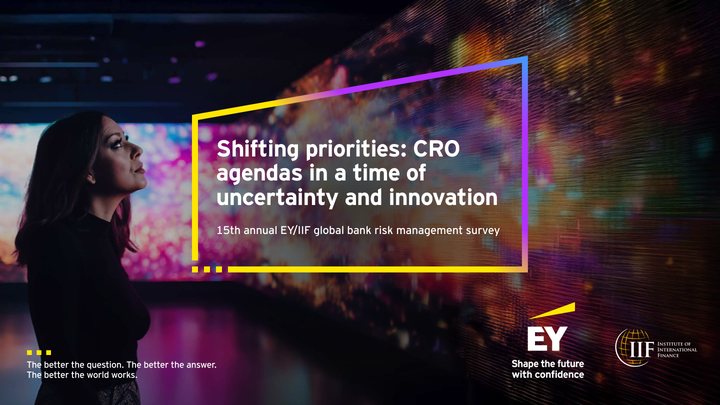
Shifting priorities: CRO agendas in a time of uncertainty and innovation (15th annual EY/IIF global bank risk management survey)

Survey of chief risk officers at 101 banks in 31 countries: cybersecurity (86 %), credit risk (62 %) and digital fraud (59 %) lead the agenda, with a specific analysis for Latin America.

By |2026-10-18T17:52:14-04:0024 de February de 2026|Publicaciones del sector|Comments Off on Shifting priorities: CRO agendas in a time of uncertainty and innovation (15th annual EY/IIF global bank risk management survey)

Financial stability risks from geoeconomic fragmentation

A joint ECB and ESRB report that proposes a monitoring framework with 40 geopolitical risk indicators: geopolitical shocks tighten financial conditions, raise risk premia and reduce credit, while market volatility has stayed contained.

By |2026-10-18T17:52:41-04:0022 de January de 2026|Publicaciones del sector|Comments Off on Financial stability risks from geoeconomic fragmentation
Go to Top