

Principles for the management of credit risk
Final version, from April 2025, of Basel’s 16 principles for credit risk management: a limited technical update of the 2000 principles, aligned with the current Basel Framework.
Final version, from April 2025, of Basel’s 16 principles for credit risk management: a limited technical update of the 2000 principles, aligned with the current Basel Framework.
Seven ECB principles with key practices and examples of good practice for managing intraday liquidity risk, arising from a thematic review after the 2023 stress and 24/7 instant payments.
The FSB analyzes the March 2023 deposit runs: outflows of 20 to 30 % a day in the fastest ones, a median of 24 % of deposits and vulnerabilities in banks, life insurers and nonbank real estate investors.
Final version of the recalibration of the IRRBB standard’s rate shocks: data series to end-2023, local factors by currency, the 99.9th percentile and rounding to multiples of 25 basis points. To be applied from 1 January 2026.
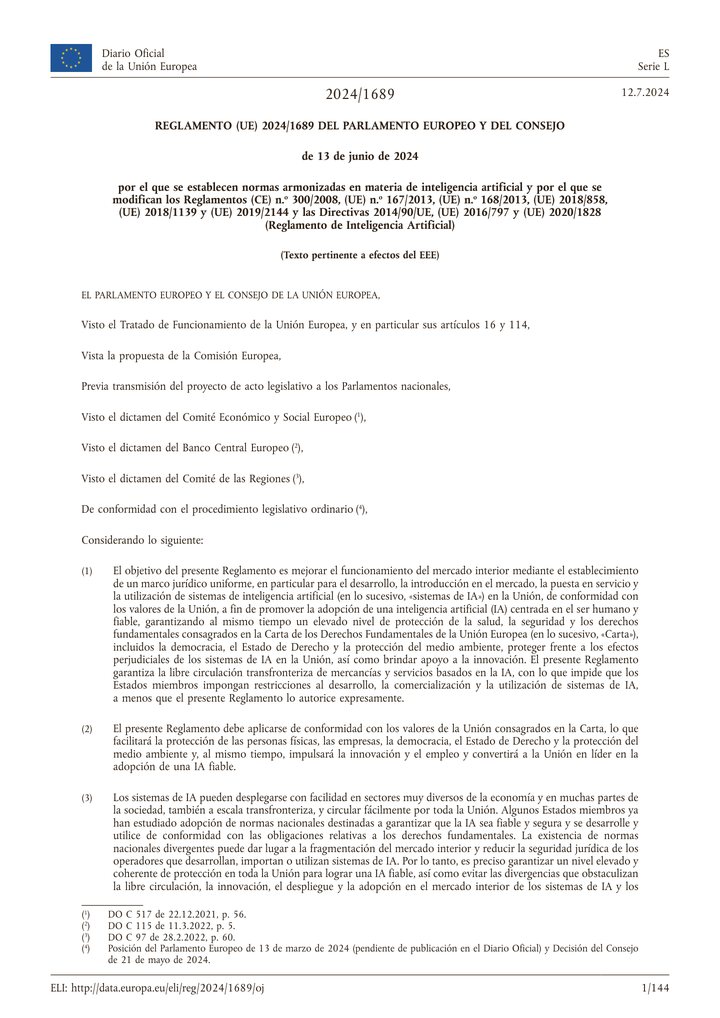
The European framework for artificial intelligence: prohibitions, requirements for high-risk systems, transparency, general-purpose models, governance and fines of up to 35 million euros or 7 % of turnover.
Results of the EBA’s 2023 stress test: 70 banks from 16 countries, an adverse scenario with 459 basis points of capital depletion and a CET1 ratio of 10.4 % at the end of the three-year horizon.
Management Solutions note on the Digital Operational Resilience Act (DORA): its six domains, the main requirements and the challenges of technology risk and cybersecurity management.
Deloitte Advisory presentation on the EBA’s developments in interest rate risk in the banking book (IRRBB and CSRBB): regulatory evolution, guidelines, standardised method, supervisory outlier test and disclosure.
Study that characterizes the interest rate risk of Dominican multiple banks’ portfolios by estimating historical yield curves of government issuers with the Nelson and Siegel (1987) model.
Deloitte Global Boardroom Program report with more than 300 board chairs in 16 countries: five forces redefining the board chair’s role, from governance to crisis and digital agility.


Connect with our networks